Hubble Space Telescope: The Eye That Opened the Universe
Hey there, space lovers… its been way too long since I posted something meaty on CurioNest, and honestly I’ve been saving this one because it’s personal. The Hubble Space Telescope is the reason I fell in love with the cosmos when I was a kid. Those images hit me like a truck, and thirty-five years later they still do. So today we’re doing a proper deep dive… no shortcuts, no fluff, just the full insane story of the telescope that turned humanity into a species that can actually see the universe. Let’s go…
Just look at it up there, quietly doing its thing while we argue about traffic down here…
From a Crazy 1946 Idea to a $2 Billion Disaster… Almost
 Public Domain
Picture 1946. Rockets can barely reach the edge of space, TV is black-and-white, and a young astronomer named Lyman Spitzer writes a paper that basically says: “Earth’s atmosphere is trash for astronomy, let’s put a telescope in orbit.” Everyone laughs. But Spitzer spends the next forty years lobbying, writing letters, testifying to Congress… the guy was relentless.
By the early 1970s NASA finally caves. They partner with the European Space Agency (ESA contributed the solar panels and the Faint Object Camera). They name it after Edwin Hubble, the legend who proved the universe is expanding back in 1929. Construction starts. The main mirror – 2.4 meters of ultra-low-expansion glass – has to be polished to within 10 nanometers. That’s like polishing the entire United States flat to the height of a paperclip.
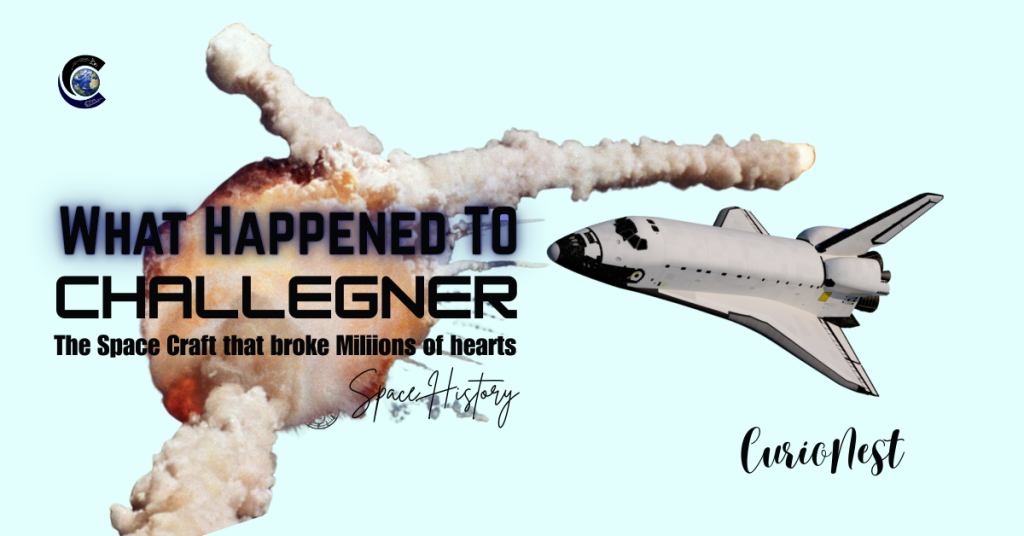
Cost explodes. Congress threatens to cancel it multiple times. Then January 28, 1986 happens – Challenger explodes. Hubble sits in a clean room for four more years while NASA figures out how to fly shuttles again. When Discovery finally launches it on April 24, 1990, the entire planet is watching.
First images come down in May… and they’re terrible. Blurry halos around every star. Turns out Perkin-Elmer (the mirror contractor) made a measuring tool wrong by 1.3 millimeters, which translated to a 2-micron edge error on the mirror. In space, that’s enough to ruin everything. Media dubs it “the $2 billion blunder”. Scientists are devastated. Some literally cry in meetings.
The 1993 Miracle – Five Spacewalks That Saved Humanity’s Reputation
 NASA
NASA
December 1993. Shuttle Endeavour launches with seven astronauts and one mission: fix Hubble or watch it become the biggest embarrassment in space history. They do five back-to-back spacewalks – the most ambitious EVA series ever attempted. Stuck bolts, frozen temperatures, tools that weren’t designed for the job… it was pure drama.
They install COSTAR – a telephone-booth-sized device with tiny mirrors that act like glasses for the older instruments – and swap out the original Wide Field/Planetary Camera for WFPC2. When the first corrected images come back in January 1994, the control room erupts. Sharp stars, crisp galaxies… astronomers stand and applaud. Some cry again, happy tears this time. Overnight, Hubble becomes the most successful science instrument ever built.
The Five Servicing Missions – Each One a Love Letter to Hubble
Because Hubble was designed from day one to be serviceable (unlike literally every other space telescope), astronauts came back four more times:
1997 – Added STIS and NICMOS, gave Hubble infrared eyes for the first time.
1999 – Emergency mission after three of six gyros failed… Hubble was literally hours from tumbling uselessly.
2002 – Installed the Advanced Camera for Surveys (ACS), the workhorse behind the Ultra Deep Field.
2009 – The grand finale. Atlantis crew replaced every single gyro, both batteries, added Wide Field Camera 3 and Cosmic Origins Spectrograph. They even repaired ACS and STIS by hand – something never designed to be fixed in space. That mission gave Hubble another 15+ years of life.
After the shuttle retired in 2011, everyone assumed that was it. But those 2009 upgrades are the reason Hubble is still dropping jaw-dropping science in 2025.
The Discoveries – Brace Yourself, This List Is Ridiculous
More than 1.7 million observations, over 20,000 scientific papers… here’s just a taste:
- Dark energy (1998) – Two rival teams using Type Ia supernovae discovered the universe’s expansion is accelerating. This unknown force is now 68% of the entire universe. Three scientists won the 2011 Nobel Prize because of Hubble.
- Precise age of the universe – 13.8 billion years, nailed down using the Hubble Constant and Cepheid variables.
- Supermassive black holes in nearly every galaxy – Hubble measured the masses of dozens, proving they’re the engines driving galaxy evolution. (Still terrified of black holes? I got you covered right here.)
- First direct image of an exoplanet (2004) – Formalhaut b, a giant planet orbiting a nearby star.
- The Deep Fields – 1995 Deep Field (10 days staring at nothing), 2004 Ultra Deep Field (11 days), 2012 eXtreme Deep Field (23 days). Result? 13,000+ galaxies in a patch of sky the size of a grain of sand held at arm’s length. Some of those galaxies are 13.4 billion light-years away – we’re seeing them as they were 400 million years after the Big Bang.
- Pillars of Creation – 1995 image of gas pillars in the Eagle Nebula, re-imaged in 2014 with WFC3 in stunning detail.
- Comet Shoemaker-Levy 9 slamming into Jupiter (1994) – Hubble watched fragments the size of Earth hit Jupiter, leaving scars bigger than our planet.
- Protoplanetary disks everywhere – Hundreds of baby solar systems caught in the act of forming planets.
- Pluto’s secret moons – Discovered Nix, Hydra, Kerberos, and Styx years before New Horizons flew by.
- Exoplanet atmospheres – Detected sodium, hydrogen, carbon, even water vapor in alien skies.
- Gamma-ray bursts – Proved they happen in distant star-forming galaxies, not our own Milky Way.
- Quasars and active galactic nuclei – Showed they’re powered by supermassive black holes eating matter at insane rates.
- Lensing clusters – Used galaxy clusters as natural telescopes to see even farther back in time.
I could keep going for pages. Entire fields of astronomy basically didn’t exist before Hubble.
How the Magic Actually Happens Up There
Hubble orbits at 540 km, zipping around Earth every 95 minutes at 28,000 km/h. It’s above 99% of the atmosphere, so no twinkling, no light pollution, no weather. Two 7-meter solar wings give it about 2.8 kW – roughly the power of two hair dryers. Six gyros (now down to one working in 2025) keep it pointed with insane accuracy – it can hold a target the size of a dime from a kilometer away for days.
Current instruments in 2025:
- WFC3 – sees from ultraviolet to near-infrared, the main camera now
- ACS – partially working after heroic 2009 repair
- COS – ultraviolet spectrograph, still the best in the world
- STIS – spectroscopy across UV/visible/near-IR
All data beams down to White Sands, New Mexico, then to Goddard, then to the Space Telescope Science Institute in Baltimore. After one year it becomes public – anyone can download raw Hubble images and make art or science.
Hubble vs James Webb – They’re Literally Best Friends
People love to pit them against each other, but that’s silly. Hubble sees ultraviolet, visible, and near-infrared. Webb sees mid- and far-infrared. When they look at the same object, it’s like seeing it in every possible color at once. Hubble is still discovering brand-new things every single week in 2025.
The Slow Twilight… Or Maybe a New Dawn?
Hubble is old. As of December 2025 it’s operating in “single-gyro mode” – it only has one working gyro left out of six. Batteries are degrading. NASA says it can probably limp along until the mid-2030s, maybe early 2040s if we’re lucky. But here’s the wild part – there are actual, serious proposals for a private servicing mission. SpaceX has talked about it. Billionaire Jared Isaacman (Polaris Program) has talked about it. Imagine a Crew Dragon docking with Hubble and giving it new gyros, new batteries, maybe even a propulsion module to boost it higher. It’s not science fiction anymore – it’s being studied right now.
Some Mind-Blowing Facts to End With
- Over 2 million individual exposures
- Never points within 45° of the Sun, Earth, or Moon – would fry the sensors instantly
- Has over 150,000 tiny impact craters from micrometeoroids
- Still costs only about $100 million a year to operate
- Has discovered more celestial objects than all ground-based telescopes in history combined
- Its archive would fill roughly 300,000 DVDs
- Still produces front-page science every single month
Common Questions
A 2-micron manufacturing error on the mirror caused spherical aberration… fixed in 1993 with corrective optics.
13.4 billion years – galaxies forming just 400 million years after the Big Bang.
NASA and ESA joint project – ESA paid 15% and provided solar panels + instruments.
Over 2 million exposures and still going strong.
No – resolution on the Moon is about 85 meters per pixel. Footprints are invisible.
Its supernova observations provided the definitive proof that expansion is accelerating.
Roughly $16 billion over 35 years – cheapest revolution in science ever.
Private missions are being actively studied – SpaceX, Polaris Program, etc.
Yes – anyone can apply for observing time, even amateurs.
It’ll be de-orbited safely into the Pacific… unless someone saves it first.
References & Further Reading
- Official HubbleSite
- ESA Hubble
- Public Archive
- Book: “The Universe in a Mirror” by Robert Zimmerman
- My black hole article: What Is a Black Hole?
- My Big Bang article: The Big Bang Explained
That’s it, folks… the full, unfiltered love letter to the telescope that showed us who we really are in this vast, beautiful, terrifying universe. Drop a comment and tell me your favorite Hubble moment – mine will always be the first corrected image in 1994. Clear skies ✨