Cosmic Cannibalism: The Universe’s Ruthless Feast
Hey folks if you’re digging into the dramatic side of astronomy cosmic cannibalism stands out as a fascinating concept that explains how the cosmos evolves through mergers and absorptions. This informal term describes larger celestial bodies consuming smaller ones driven by gravity and it’s key to understanding the universe’s structure. As someone who’s explored countless studies and simulations I find it intriguing how these events shape galaxies stars and more. In this article we’ll dive deep into what it means why it happens and its impacts with real examples and science backed insights. With 2025 bringing new telescope data from JWST Energia’s story wait no cosmic cannibalism’s relevance feels more alive than ever showing the universe’s ongoing dance of destruction and creation. Lets get into it.
What Is “Cosmic Cannibalism”?
Imagine the universe as a vast dynamic ocean where bigger fish constantly swallow the smaller ones to grow stronger. This isnt just a metaphor its the essence of cosmic cannibalism an informal term astronomers use to describe how larger celestial bodies absorb or consume smaller ones. At its core cosmic cannibalism refers to the gravitational interactions that lead to mergers absorptions or disruptions between cosmic entities where the dominant object incorporates material from the weaker one.
This process isnt about literal eating like a predator devouring prey on Earth. Instead its driven by the fundamental forces of the universe: gravity pulling objects together tidal forces stretching and tearing them apart and eventual mergers that blend their masses. Its a natural phenomenon as common as stars twinkling in the night sky. Without it the cosmos wouldnt look the way it does today galaxies wouldnt evolve black holes wouldnt bulk up and the chemical makeup of space would be far less diverse.
Cosmic cannibalism occurs across various scales. Stars can strip material from companions planets might get engulfed by their host stars galaxies merge with dwarfs and black holes devour anything that strays too close. These events shape the structure of the universe turning chaotic collisions into the ordered spirals and ellipticals we observe. In a sense its the universes way of recycling matter ensuring nothing goes to waste in the grand cosmic cycle.
Why Cosmic Cannibalism Happens — The Role of Gravity
Gravity is the invisible hand orchestrating cosmic cannibalism much like how it keeps you grounded on Earth. In space this force draws smaller objects toward larger ones setting the stage for dramatic encounters. When two bodies get close enough gravity doesnt just attract it dominates.
Consider orbital decay: objects in orbit around a larger mass gradually lose energy due to friction from gas dust or gravitational waves spiraling inward like a coin dropping into a funnel. Tidal forces add to the drama theyre the stretching effects caused by uneven gravitational pulls similar to how the Moon tugs at Earths oceans to create tides. In extreme cases these forces can rip an object apart before its fully consumed.
Dense environments amplify the chances. In galaxy clusters or star-forming regions where crowds of celestial bodies jostle like commuters in a busy station interactions are frequent. Energy loss through these encounters seals the deal leading to inevitable mergers. A simple analogy: think of two dancers twirling closer until they become one fluid motion. Thats gravity at work turning potential rivals into unified giants.
Types of Cosmic Cannibalism
Galaxy Cannibalism
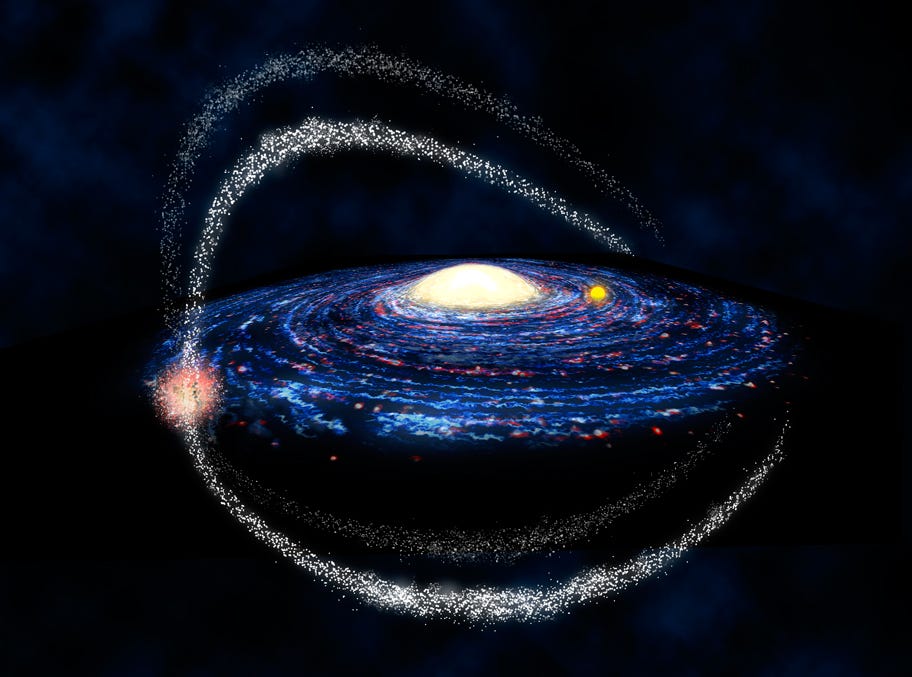
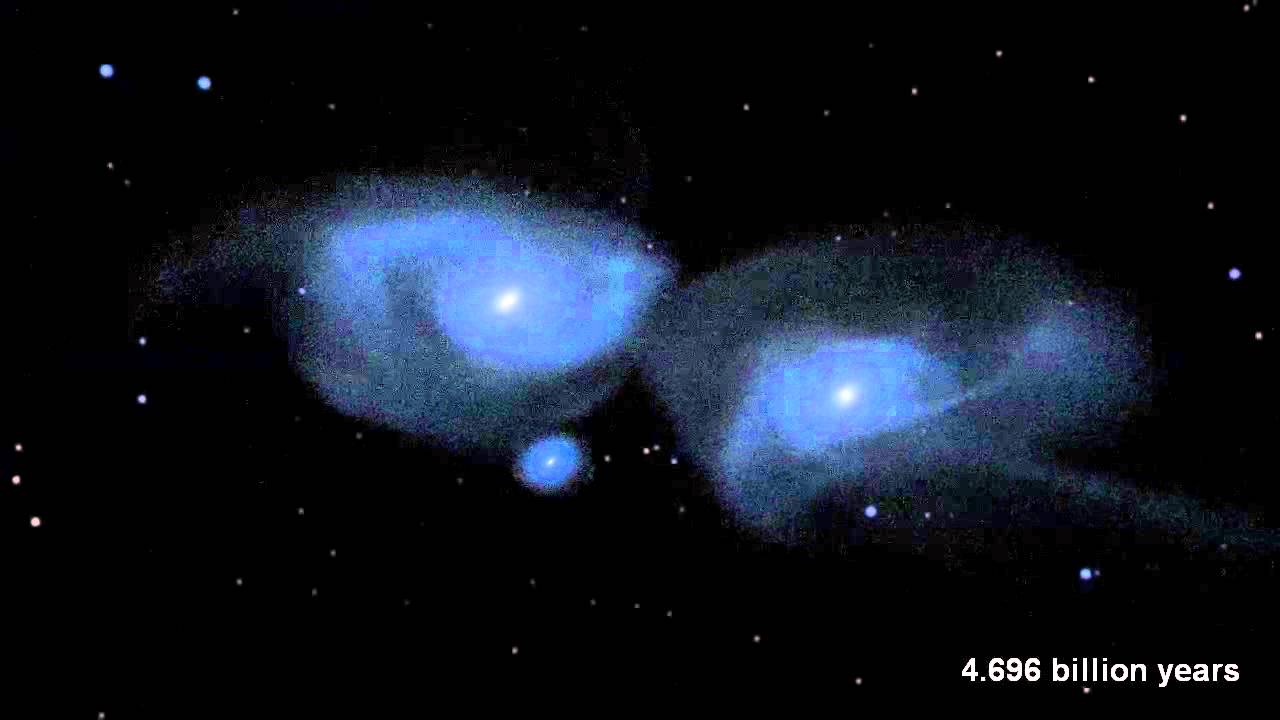
Galaxies arent static islands theyre living entities that grow through mergers often devouring smaller companions in a process called galaxy cannibalism. Larger galaxies with their immense gravitational pull strip stars gas and dust from dwarf galaxies incorporating them into their own structure. This leaves behind tidal streams long arcing trails of stars like cosmic breadcrumbs from a shredded loaf.
During these mergers star populations mix blending old and new generations. Dark matter halos the invisible scaffolding around galaxies also fuse strengthening the survivors framework. The influx of gas can trigger starbursts explosive periods of new star formation akin to a fireworks show after a storm.
Supermassive black holes at galaxy centers might merge too releasing gravitational waves detectable from Earth. This is common in galaxy evolution most large galaxies including our Milky Way bear scars from past feasts. For instance the Milky Way is currently consuming the Sagittarius Dwarf Galaxy whose stars are being pulled into our spiral arms. Andromeda our neighboring giant has a history of similar meals with remnants visible in its halo. Looking ahead the Milky Way and Andromeda are set for a head-on collision in about 4-5 billion years a merger that will reshape both into a new elliptical galaxy.
Star Cannibalism (Stellar Cannibalism)
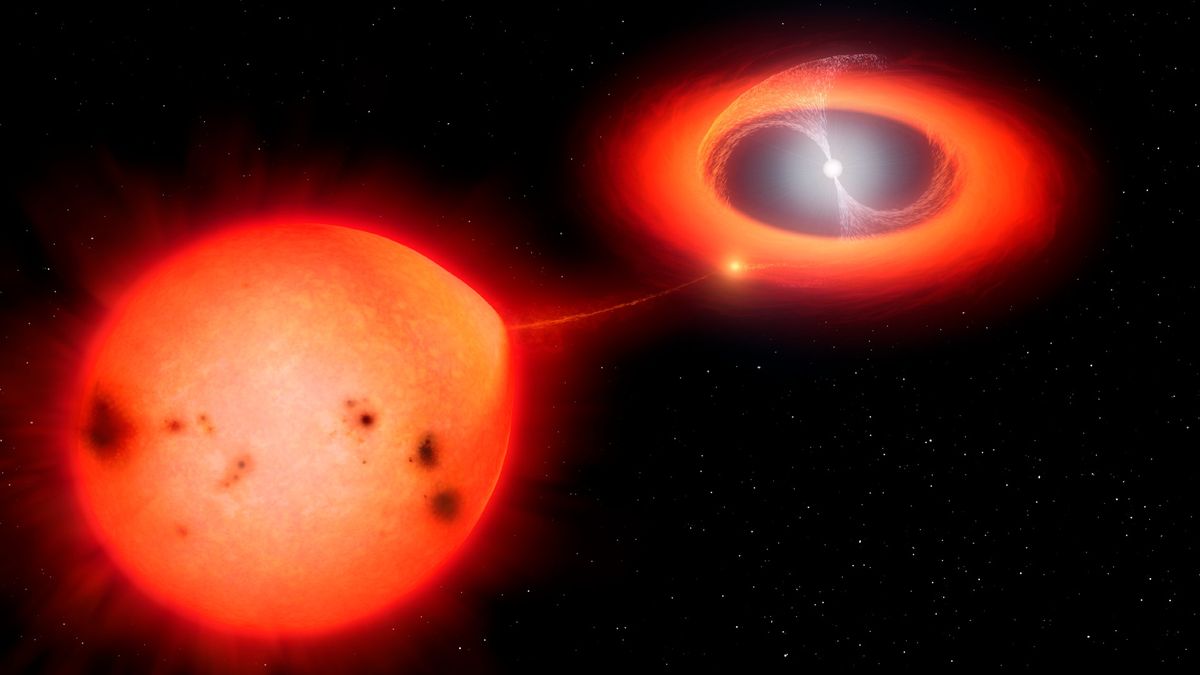
Stars too engage in cannibalism especially in binary systems where two stars orbit each other closely. One star can siphon mass from its companion through Roche lobe overflow where the donor stars outer layers spill over due to gravitational distortion like water overflowing a dam.
Red giants swollen in their later years might swallow nearby stars outright. Compact objects like white dwarfs or neutron stars pull material from partners forming accretion disks that heat up and emit X-rays creating X-ray binaries. This feeding can lead to nova explosions bright flashes from accumulated hydrogen igniting or even trigger supernovae if the cannibal star gains too much mass.
In dense star clusters collisions create blue stragglers: stars that appear younger and brighter than their peers possibly from merging with or stripping companions. Its a brutal ballet where one stars gain is anothers demise reshaping stellar populations over eons.
Black Hole Cannibalism
Black holes are the universes ultimate gluttons consuming matter with insatiable hunger. When material falls in it forms an accretion disk a swirling vortex of gas heating to millions of degrees emitting intense radiation before crossing the event horizon.
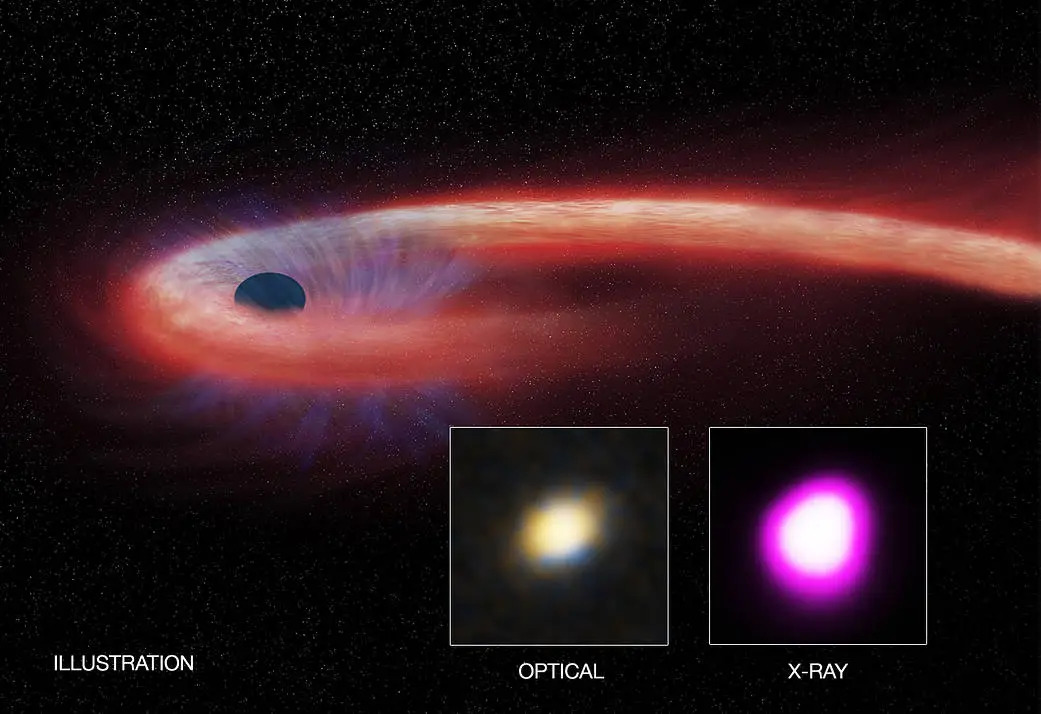
Tidal Disruption Events (TDEs) occur when a star ventures too close: tidal forces stretch it into a noodle-like shape (spaghettification) before tearing it apart. Half the stars mass gets ejected as flares while the rest spirals in lighting up the sky brighter than a galaxys worth of stars.
Stellar-mass black holes form from collapsed stars and merge via gravitational waves as detected by LIGO. Supermassive ones lurking in galaxy centers grow through repeated feasts. These events arent rare theyre key to black hole evolution turning puny seeds into monsters millions of times the Suns mass.
Planetary Cannibalism
Even planets arent safe from cosmic appetites. Young stars in protoplanetary disks might gobble up forming planets disrupting their growth. As stars age and expand into red giants they engulf inner worlds our Sun could swallow Mercury and Venus in 5-7 billion years possibly Earth too.
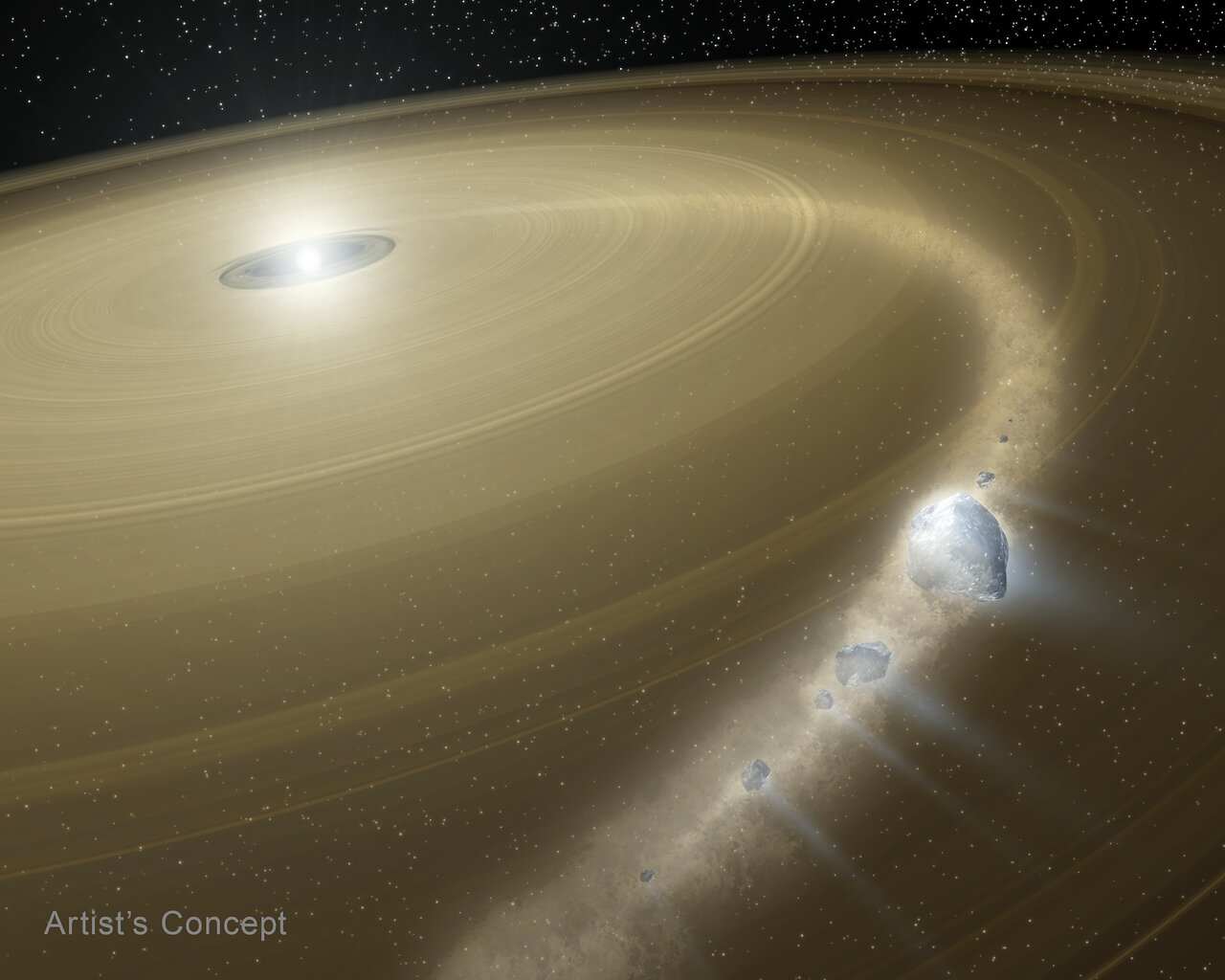
Hot Jupiters gas giants orbiting perilously close to their stars spiral inward due to tidal friction eventually meeting fiery ends. Evidence comes from chemical fingerprints: polluted white dwarf atmospheres show rocky debris from shredded planets. Real-time observations capture these destructions revealing the volatile nature of planetary systems.
Observational Evidence — How Do We Know?
Astronomers piece together cosmic cannibalism like detectives at a crime scene using tools that peer into the universes depths. Spectroscopy breaks down light to reveal chemical compositions showing pollution in stars from ingested planets.
Tracking star motions with telescopes like Gaia maps tidal streams from devoured galaxies. Gravitational wave detectors like LIGO catch black hole mergers ripples. X-ray telescopes such as Chandra spot accretion in binaries while radio astronomy traces gas flows.
Deep-field surveys from Hubble and JWST uncover merger remnants in distant galaxies. Infrared views penetrate dust revealing hidden feasts. Light curves from TDEs show characteristic brightening confirming black hole meals.
Why Cosmic Cannibalism Matters — Its Role in Cosmic Evolution
Cosmic cannibalism isnt mere destruction its a builder of cosmic architecture. Galaxies grow from dwarfs into majestic spirals or ellipticals through mergers mixing stars and triggering births.
It enriches the universe chemically: supernovae from cannibal stars spread heavy elements seeding new worlds. Black holes bulk up influencing galaxy cores. Overall it drives evolution turning a uniform early universe into the diverse tapestry we see.
Real-World Case Studies
Our home galaxy is a serial cannibal. The Sagittarius Dwarf discovered in 1994 is being torn apart its stars forming streams across the Milky Ways halo. Gaia data shows multiple passages each stripping more material. This ongoing feast adds billions of stars to our galaxy.
Andromeda has consumed several dwarfs leaving globular clusters and stellar halos as evidence. A major merger 2 billion years ago reshaped its disk visible in star age distributions.
In 2020 astronomers witnessed AT2019qiz a star shredded by a supermassive black hole flaring brightly for months. Such events highlight black holes voracious nature.
SS Cygni a cataclysmic variable shows a white dwarf stripping a companion causing periodic novae.
WD 1145+017 reveals transits of disintegrating planetesimals dust polluting its atmosphere.
Cosmic Timescales — How Long Does It Take?
Cosmic cannibalism unfolds on vast timescales. Galaxy mergers span millions to billions of years like slow-motion dances. TDEs flash over weeks to months quick bursts in cosmic terms.
Black hole feeding varies: steady accretion lasts millennia mergers instants via waves. Planetary engulfment happens late in a stars life over billions of years as it expands.
Cannibalism vs Collision — What’s the Difference?
Collisions imply impacts but in space theyre often gentle pass-throughs due to vast distances. Cannibalism means absorption and growth where one entity dominates and incorporates the other.
Some mergers are violent with gas shocks others gradual. Not all collisions lead to cannibalism equals might just interact without full merger.
Common Misconceptions to Clear Up
Cannibalism isnt literal no mouths or digestion involved its gravitational. Not everything colliding explodes galaxies merge with stars rarely hitting.
Black holes dont suck everything instantly only close objects fall in. This process is normal not rare most galaxies have merger histories.
The Future of Cosmic Cannibalism
In 4-5 billion years the Milky Way and Andromeda will merge birthing Milkomeda a new giant. Our Solar System might survive flung outward.
Supermassive black holes will continue growing via TDEs and mergers. Dwarf absorptions persist planetary systems face engulfment as stars age. The universe ever hungry evolves through these feasts a poetic reminder of its dynamic devouring heart.
History of the Term “Cosmic Cannibalism”
The term emerged in the 1970s-1980s as astronomers observed galaxy interactions. Early uses described mergers like in papers on elliptical formation. It expanded with Hubble data in the 1990s encompassing stars and black holes. Popularized in media it captures the dramatic essence of these events.
How Scientists Study It
Computer simulations model mergers on supercomputers predicting outcomes. Observational tools include Hubble for visuals JWST for infrared details Gaia for motions Chandra for X-rays and LIGO for waves.
Missions like these provide data refining our understanding.
Human Perspective — Why We Love This Topic
Cosmic cannibalism adds mystery and drama to the night sky reminding us the universe is alive with change. It mirrors lifes cycles birth growth death making the cosmos relatable. In a static world it shows eternal dynamism.
Common Questions
Not literally but they absorb material through gravity growing larger.
Unlikely stars are sparse so it might just shift orbits.
Possibly when the Sun expands in 5-7 billion years though Earth might evaporate first.
Through X-ray emissions novae and spectral anomalies in binaries.
Rarely space is empty so direct hits are improbable.
Mainly gravity leading to mergers and absorptions.
Very common most large galaxies have histories of mergers.
When a star is torn apart by a black holes tidal forces.
Yes mergers can trigger starbursts from compressed gas.
Telescopes like JWST Gaia LIGO and computer simulations.
References & Further Reading
- Wikipedia: Galactic cannibalism
- NASA: Galactic Cannibalism
- ESA: Gaia unravels Milky Way threads
- Scientific American: Cosmic Cannibalism
- Space.com: Tidal Disruption Events
- Astrobiology: Planets that Eat Planets
- Nature: Stellar Cannibalism
- HubbleSite: Galaxy Mergers
- JWST: Galaxies and Mergers
- LIGO: Black Hole Mergers