Falcon Heavy’s Epic First Launch: The 2018 Blast-Off That Revolutionized Space Travel
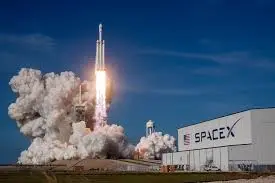
Hey, think back to February 2018, when the world was buzzing about SpaceX and their monster rocket, the Falcon Heavy. It was like something out of a sci-fi movie, this massive beast roaring to life at Kennedy Space Center, sending a red Tesla Roadster zooming into space with a dummy driver at the wheel. On February 6, at around 3:45 p.m. Eastern time, the Falcon Heavy made its debut flight, becoming the most powerful rocket in operation at the time, capable of hauling twice the payload of its closest rival. This wasn’t just a launch, it was a statement from Elon Musk and his team, proving that private companies could push the boundaries of space exploration in ways governments had only dreamed of. Now, in December 2025, looking back, that launch feels like a turning point, kicking off a new era of reusable rockets, ambitious Mars plans, and even space tourism. In this article, we’re gonna dive deep into how it all came together, the thrills and near-misses of that day, the quirky payload, and why it still matters big time today. Whether you’re a space geek or just someone who loves a good underdog story, stick around, cause this tale has innovation, drama, and a whole lot of rocket science.
The Birth of a Beast: How Falcon Heavy Came to Be
To understand the hype around that 2018 launch, we need to go back a bit further. SpaceX, founded by Elon Musk in 2002, started with the Falcon 1, a small rocket that had its share of failures before succeeding in 2008. From there, they scaled up to the Falcon 9, which became their workhorse for launching satellites and supplying the International Space Station. But Musk had bigger visions, he wanted a heavy-lift rocket that could carry massive payloads to orbit, the moon, or even Mars. Enter the Falcon Heavy, announced in 2011 as essentially three Falcon 9 cores strapped together, with 27 Merlin engines firing in unison to produce over 5 million pounds of thrust at liftoff.
Development wasn’t easy though. There were delays, lots of them, original target was 2013, but technical challenges like integrating the side boosters and ensuring structural integrity pushed it back. By 2017, SpaceX had nailed reusable landings with Falcon 9, recovering boosters to cut costs dramatically. The Heavy built on that, aiming to reuse all three cores. In January 2018, they did a static fire test on Pad 39A, the historic Apollo pad, where the rocket’s engines lit up for 12 seconds while held down, a crucial step to check everything worked. Musk himself tweeted about the risks, saying the launch had a good chance of exploding, which added to the excitement.. or tension, depending on how you looked at it.
The rocket stood 230 feet tall, about the height of a 20-story building, and could loft up to 64 metric tons to low Earth orbit, that’s like sending a fully loaded Boeing 737 up there, passengers and all. But for the maiden flight, they went with a dummy payload, no paying customer wanted to risk their satellite on an unproven rocket. And what a payload it was, more on that soon.
Building the Buzz: Pre-Launch Preparations and Hype
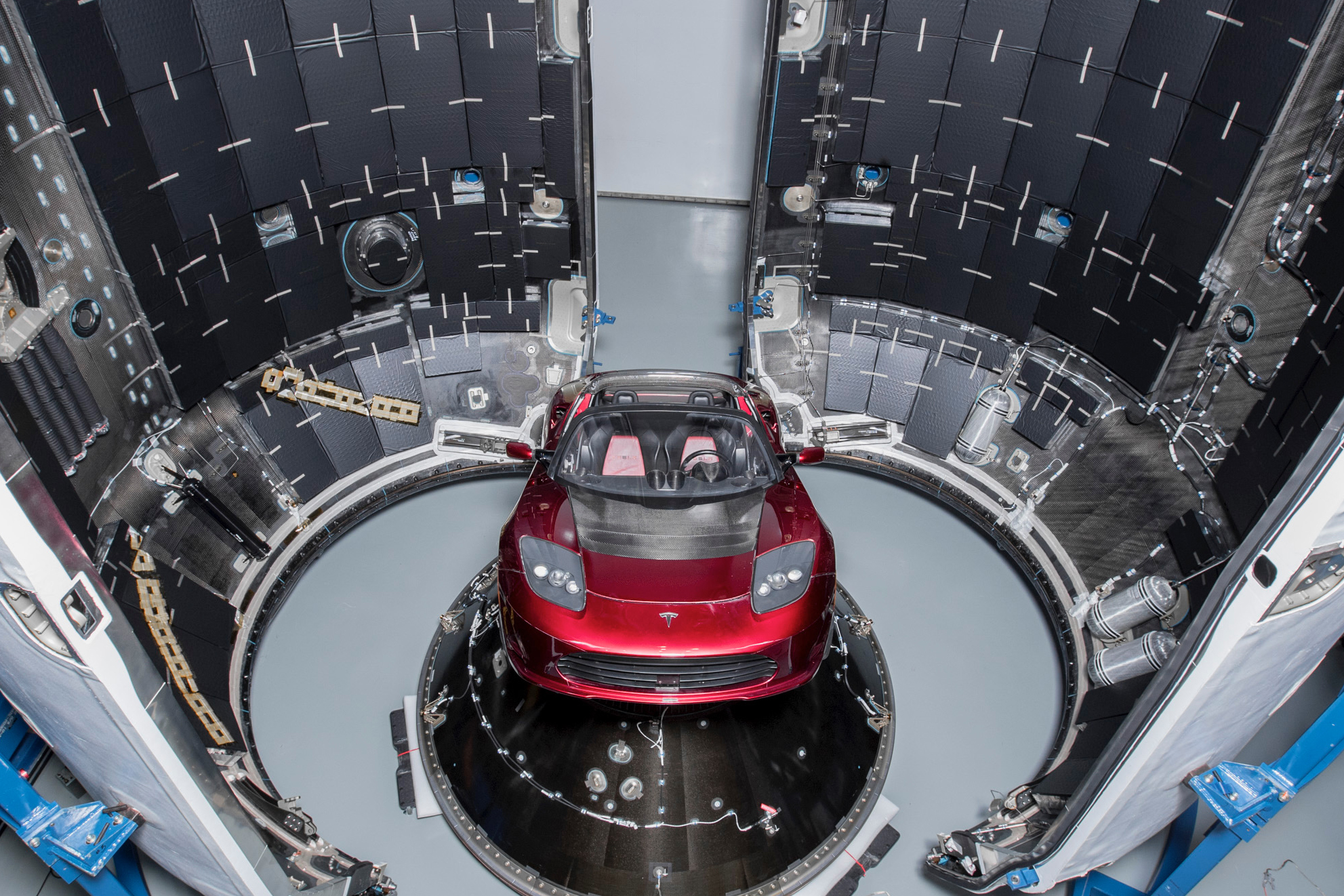
As the launch date approached, the world was watching. SpaceX had a knack for marketing, live-streaming their launches and turning them into events. For Falcon Heavy, they amped it up, revealing the payload would be Musk’s own cherry-red Tesla Roadster, with a spacesuit-clad mannequin named Starman in the driver’s seat. The car’s stereo would play David Bowie’s “Space Oddity” on loop, a fun touch that captured imaginations. This wasn’t just engineering, it was showmanship, blending tech with pop culture to make space accessible and cool.
Pad 39A at Kennedy Space Center was buzzing with activity. The rocket was rolled out, fueled with liquid oxygen and RP-1 kerosene. Weather was a factor, high winds delayed the original window, but on February 6, conditions cleared. The countdown was nail-biting, with holds for technical checks. Musk admitted to nerves, tweeting about the complexity of syncing 27 engines. Critics doubted, some called it a publicity stunt, but supporters saw it as a leap toward affordable space travel. NASA watched closely too, since SpaceX was partnering on crewed missions.
One key innovation was the reusability. The plan: side boosters would land back at Cape Canaveral, center core on a drone ship in the Atlantic. If successful, it would slash launch costs from hundreds of millions to tens of millions, opening doors for more missions.
The Star of the Show: That Quirky Tesla Payload
Okay, let’s talk about the payload, cause it’s what made this launch legendary. Instead of a boring concrete block, Musk chose his personal 2008 Tesla Roadster. Why? Partly for fun, partly to demonstrate the rocket’s capability without risking real cargo. The car was mounted on the upper stage, with cameras to beam back views of Earth. Starman, the dummy, wore a prototype SpaceX spacesuit, hands on the wheel like he was cruising the cosmos.
Inside jokes abounded: the dashboard screen read “Don’t Panic,” a nod to Hitchhiker’s Guide to the Galaxy. Circuit boards etched with employee names, a plaque saying “Made on Earth by humans.” It was whimsical, but also symbolic, showing space could be playful, not just serious science. Critics said it was wasteful, adding to space junk, but Musk argued it would orbit the sun for millions of years, perhaps inspiring future explorers.
The Roadster’s trajectory: a heliocentric orbit extending to Mars’ distance, though not landing there. It became the first car in space, a milestone blending automotive and aerospace worlds.
Liftoff: The Moment of Truth on February 6, 2018
Finally, the big day. Crowds gathered miles away, phones ready to capture history. At 3:45 p.m. ET, the countdown hit zero, and.. wow. The 27 engines ignited in a symphony of fire, the ground shook as Falcon Heavy lifted off slowly at first, then accelerating skyward. Cheers erupted as it cleared the tower, no explosion in sight.
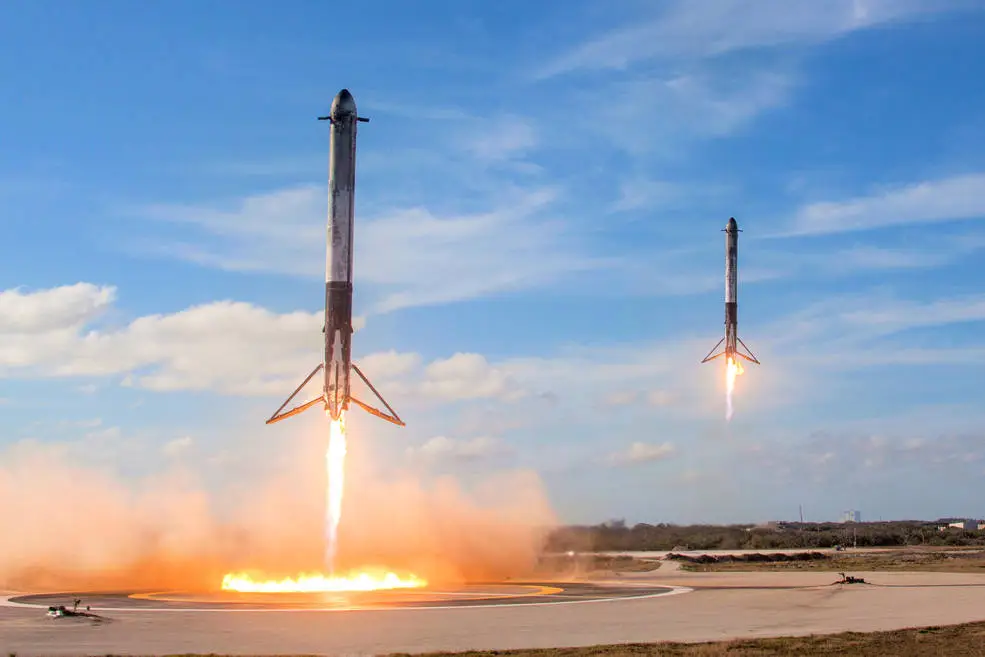
The ascent was textbook. At about 2 minutes 30 seconds, the side boosters separated, flipping for their return burns. The center core continued, throttling down to save fuel. Then, the magic: those side boosters arced back, landing simultaneously at Landing Zones 1 and 2, a synchronized ballet that blew minds. Sonic booms echoed, confiming success.
The center core aimed for the drone ship “Of Course I Still Love You,” but missed, crashing into the ocean at 300 mph due to triethylaluminum-triethylborane igniter issues, only one of three engines relit. A minor setback in an otherwise triumphant day.
Beyond the Boosters: Deploying the Payload and Orbit Achieved
With boosters down, attention turned to the upper stage. It coasted, then fired to reach a parking orbit. Cameras showed Starman with Earth in the background, a surreal sight that went viral. The stage fired again, sending the Roadster into its elliptical orbit around the sun.
SpaceX’s live stream peaked at over 2.3 million viewers, a record. Musk held a press conference, beaming about the success, joking about the car’s journey. “It’s kind of silly and fun, but I think silly and fun things are important,” he said.
Challenges Overcome: What Could Have Gone Wrong
Not everything was perfect. The center core’s failed landing highlighted risks in reusability. Early development faced skeptics, with some predicting failure rates high for first flights. But SpaceX’s iterative approach, learning from Falcon 9 explosions, paid off. The launch cost about $90 million, a bargain compared to NASA’s SLS at billions.
Technically, syncing the boosters was tough, vibrations could have shaken things apart, but reinforcements worked. The Merlin engines, reliable from hundreds of firings, performed flawlessly.
Global Reactions: From Awe to Inspiration
The world reacted with wonder. Social media exploded with memes of Starman, Bowie’s song trending. NASA congratulated SpaceX, seeing it as a boost for American space prowess. Competitors like Blue Origin took note, accelerating their heavy-lift plans.
Environmentalists raised concerns about space debris, but the Roadster’s distant orbit minimized risks. Kids everywhere got excited about space, teachers used the launch in lessons, sparking STEM interest.
The Bigger Picture: Significance for Space Exploration
Why did this matter? Falcon Heavy proved heavy-lift reusability, cutting costs to make moon bases or Mars colonies feasible. It opened markets for big satellites, deep-space probes. For SpaceX, it validated their tech for Starship, the next giant leap.
Commercially, it attracted customers, with later missions like Arabsat-6A in 2019. Scientifically, it enabled complex payloads, like the STP-2 mission with 24 satellites. Politically, it shifted focus from government monopolies to private innovation, influencing policies like NASA’s Artemis partnerships.
Legacy in 2025: How Falcon Heavy Shaped the Future
Fast-forward to now, Falcon Heavy has flown multiple times, each building on that first success. It’s launched spy satellites, communications birds, even NASA’s Psyche mission to an asteroid. Reusability is norm, with boosters flying again and again.
The Roadster? Still out there, completing orbits, a beacon of human ingenuity. Musk’s vision expanded to Starship, aiming for Mars colonization. The launch inspired a new generation, showing dreams can become reality with bold risks.
But challenges remain, space is hard, failures like Starship tests remind us. Yet, that 2018 launch showed perseverance pays. It democratized space, making it not just for superpowers, but entrepreneurs too.
Hey! Wanna read more about historic space launches before the 2020s? I got you covered right here … sometimes looking back at these milestones really puts today’s advances in perspective.
Wrapping Up: Why the Falcon Heavy Debut Still Thrills
In the end, that first Falcon Heavy launch was more than rockets and payloads, it was about pushing limits, having fun while doing serious work, and inspiring the world to look up. From the synchronized booster landings to Starman sailing through space, it captured imaginations like few events before. As we head toward more ambitious goals, like returning to the moon or stepping on Mars, remember that chilly February day in 2018 when SpaceX showed us the future.. one thunderous liftoff at a time.
Common Questions
February 6, 2018, at 3:45 p.m. ET.
Elon Musk’s Tesla Roadster with a dummy named Starman.
The side boosters did, but the center core missed the drone ship.
It produces over 5 million pounds of thrust, twice that of the next most powerful rocket at the time.
In a heliocentric orbit around the sun, occasionally approaching Earth and Mars.
David Bowie’s “Space Oddity” on repeat.