Is the Moon Real? Busting the Myth That It’s Just Earth’s Reflection
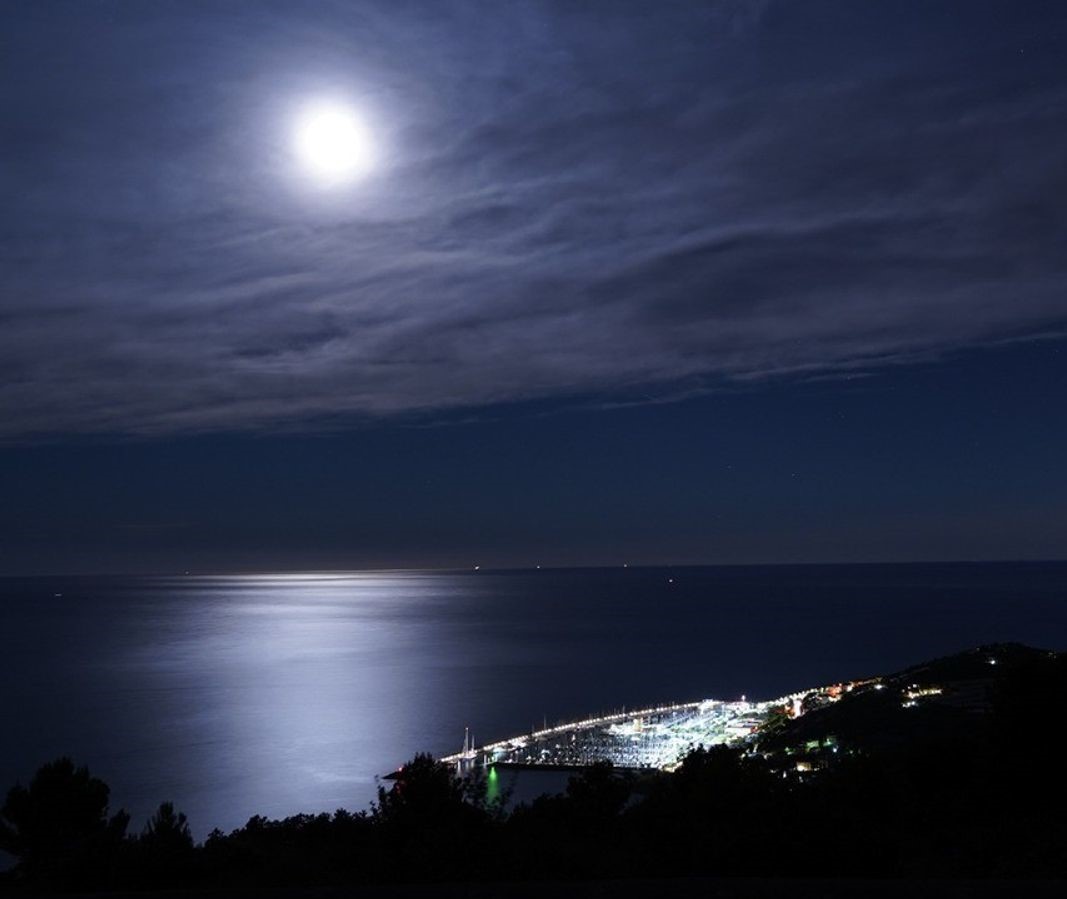
Hey folks, space fans, skeptics, and anyone who’s ever stared at the night sky wondering what’s really up there. If you’ve chatted with someone who swears, “The Moon? Nah, that’s just Earth’s reflection glowing at night,” I feel your pain. As a space enthusiast who’s spent countless nights with telescopes and days buried in NASA reports, I’ve tried explaining the basics over coffee or online, but it bounces off like light off regolith. People cling to that idea because the Moon looks so perfect, so ethereal sometimes, especially when it’s mirrored in a calm lake or ocean. But trust me, it’s not a cosmic mirror trick. It’s a solid rock, 384,400 kilometers away, pulling tides and stabilizing our planet.
I wrote this piece to lay it all out, from the Moon’s wild origin story post-Big Bang era (no full Big Bang deep dive here, grab the details at https://curio-nest.xyz/big-bang-explained-what-happened-after/), through its formation, shine, effects on Earth, phases, landings, and right up to today’s buzzing missions. We’ll bust myths with hard science, recent data, and why those doubts stick around. By the end, you’ll have everything to shut down the next doubter… or at least spark a good talk. Let’s dive in, shall we?
The Moon: Earth’s Ancient, Rocky Companion
First off, the Moon ain’t no illusion. It’s Earth’s sole natural satellite, a hefty sphere about 3,475 kilometers across, roughly a quarter of our planet’s diameter. That’s small compared to Earth, but massive enough to yank oceans around. Weighing in at 7.34 x 10^22 kilograms, its density clocks at 3.34 grams per cubic centimeter, lighter than Earth’s 5.51 due to lacking a big iron core (Moon’s core is tiny, maybe 2% of its mass).
Composition-wise, the surface is basaltic rock, rich in oxygen, silicon, magnesium, iron, calcium, and aluminum. Highlands gleam with anorthosite (light, plagioclase feldspar), pocked by craters from eons of meteor smacks. Maria (Latin for “seas”) are darker basaltic plains from ancient lava floods 3-4 billion years ago, covering 17% of the near side but scarce on the far side (thicker crust there blocked magma). Regolith, that powdery gray dust astronauts kicked up, is impact-shattered rock, 5-10 meters deep in maria, thicker (20m+) in highlands. No air means no erosion, so craters stay sharp: South Pole-Aitken Basin stretches 2,500 km wide, Tycho 85 km across.
Recent probes confirm: China’s Chang’e-5 (2020) and Chang’e-6 (2024 far-side samples) hauled back basalt differing from Apollo’s, showing varied volcanism. India’s Chandrayaan-3 (2023 south pole) sniffed sulfur, expanded water ice hunt beyond poles. Japan’s SLIM (2024 precision lander) nailed mini-craters. These aren’t fakes, folks… samples match orbital spectra.
How the Moon Formed: The Giant Impact Story
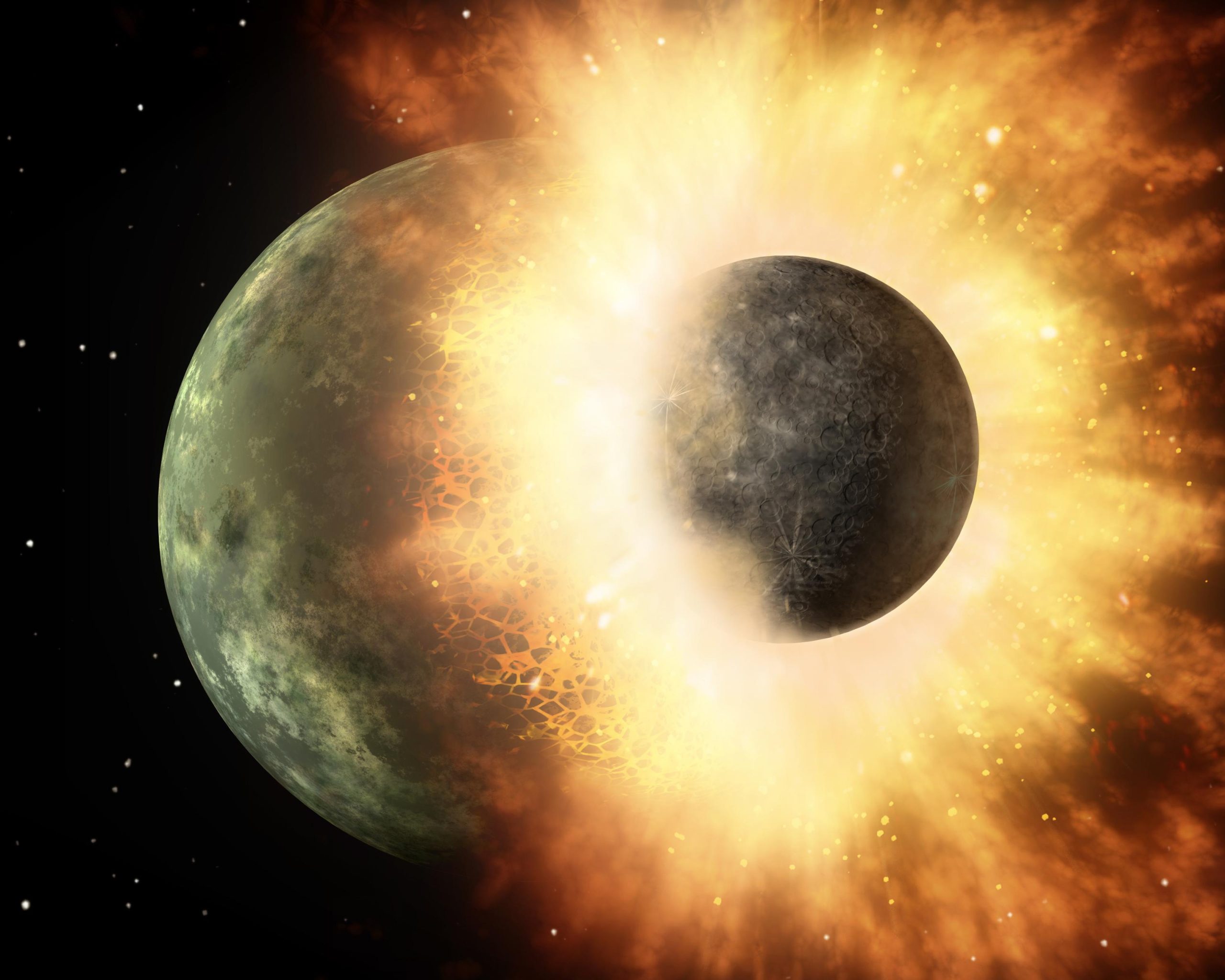
Formed 4.5 billion years ago, amid solar system’s chaos. Canonical giant-impact: Mars-sized Theia whacked proto-Earth, vaporizing mantles into a debris disk that coalesced into Moon (explains low iron, shared isotopes). But 2024-2025 twists: Zhou et al. isotope crisis (Moon too Earth-like), arXiv “New Hope” multiple impacts (3+ hits mix better), refractory elements challenge single smash. Explosive fission models too. Rocks date it solid: Apollo’s 382 kg (studied globally) match no Earth fakes, zap tests confirm solar wind zap.
Not placed by aliens, not artificial. Natural as tides.
Why the Moon Shines: Sunlight’s Silver Bounce, Not Earth’s Mirror
Core myth: Moon’s Earth’s night reflection. Nope. Moon emits zero light, reflects 12% sunlight (albedo). Full Moon? Opposite Sun, fully lit half faces us. Crescent? Sliver lit. Earth’s reflection on Moon? Too dim, wrong phase (Earthshine faint blue via atmosphere).
No atmosphere scatters light weird: sharp shadows, no twinkle. Conspiracists cry “no stars in photos!” Cameras set for bright regolith (f/5.6, 1/250s) wash faint stars; try snapping stars daytime here. MythBusters replicated. Lunar day harsh, like Sahara noon.
Moon Phases and Eclipses: Pure Geometry
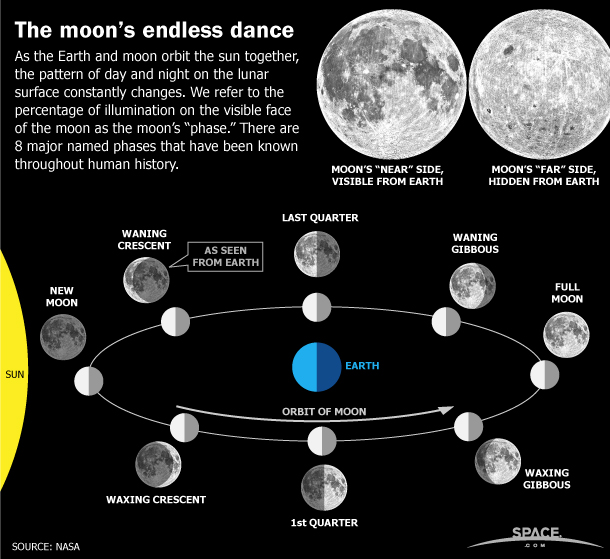
Phases? Orbital geometry. New Moon (Sun-Moon-Earth align, solar eclipse if nodal), waxing crescent (Moon east, 45° lit), first quarter (90° east, half lit), gibbous, full (180°, lunar eclipse), waning. Cycle: 29.53 synodic months. Saros cycle predicts eclipses (223 synodics = 18y11d, 70 events).
Lunar eclipse: Earth shadows Moon red (Rayleigh scatter). Solar: Moon blocks Sun (total if umbra hits). Predictable math, no fakery.
The Moon’s Massive Grip on Earth: Tides, Tilt, Life’s Rhythm
Moon’s no passive orb. Gravity (1/6 Earth’s) bulges oceans: two highs daily (nearest/farthest sides), Sun adds (spring/neap tides). Without Moon, solar tides 1/3 strength, stagnant seas, dead zones. Tides mix nutrients, oxygenate deeps, fuel estuaries (oysters feed high tide, corals spawn full Moon). 2024 studies: king tides shift fish spawn, crabs amid sea rise.
Axial tilt (23.5°)? Moon stabilizes vs. wobbles (Mars swings 0-60°, ice ages galore). No Moon: chaotic seasons, frozen equator or baked poles, no stable life (per evo models). Early tides maybe birthed RNA in pools.
Biology: Circalunar rhythms. Corals sync spawn, turtles nest full Moon, wolves howl more (echoes?). Human sleep dips 20min pre-full (2021 study), but myths (werewolves, menses) overblown. Plasmasphere tides (Nature Physics 2023). Ecosystems thrive on lunar clock.
Moon Landings: Ironclad Proof from Rocks to Lasers
Doubters: “Staged!” But Apollo 11 (July 20, 1969: Armstrong/Aldrin 2.5hrs, samples, flag) kicked off six landings (12 walkers). Full scoop? https://curio-nest.xyz/apollo-11-mission-1969. Gemini prep: https://curio-nest.xyz/project-gemini/.
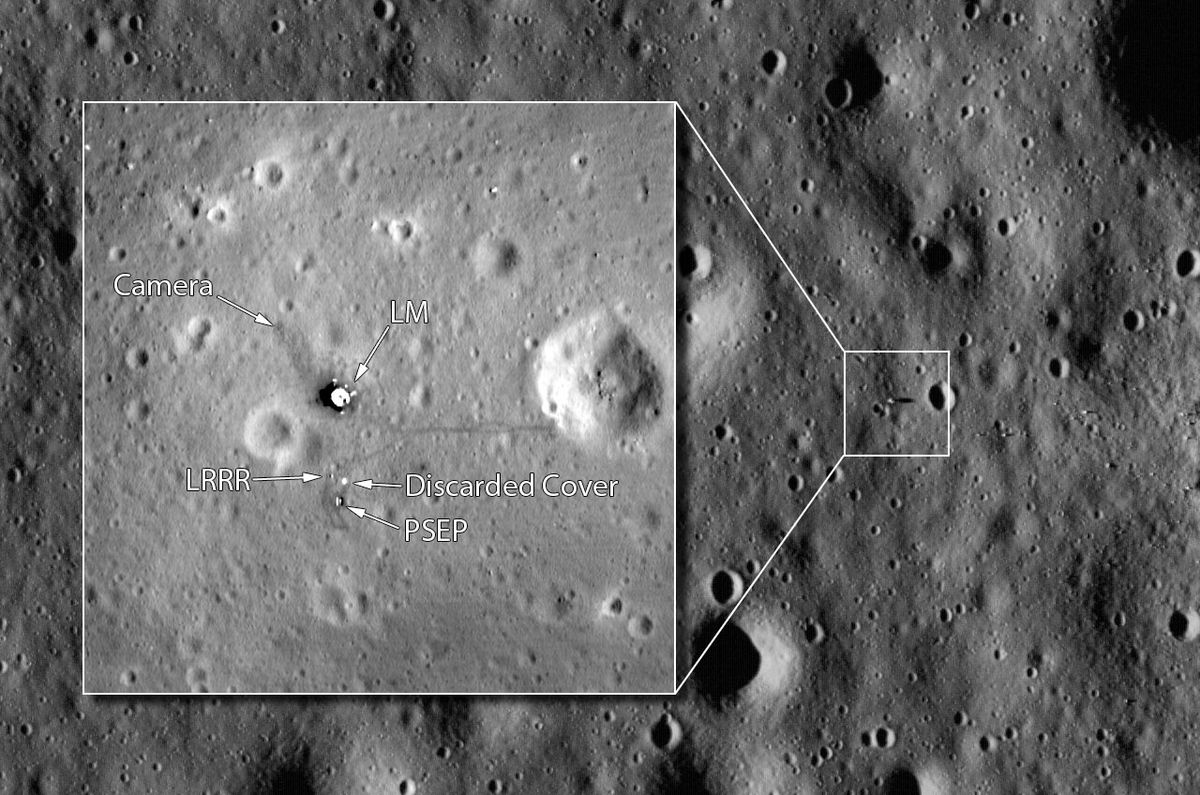
Proof avalanche: 382kg rocks (unique zap-tracks), retroreflectors (lasers ping cm-precise), orbital snaps (LRO, Chandrayaan-2, Chang’e-2 show tracks), tracking (USSR/Australia), no stars/shadows/flag (physics explained).
Artemis: Back to the Moon, Gateway to Mars (2025 Updates)
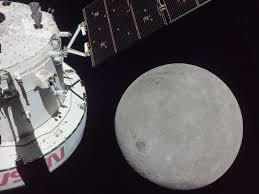
Artemis 1 (2022 uncrewed): Orion looped Moon. Full story: https://curio-nest.xyz/artemis-1-mission/. Artemis 2 (crew flyby): April 2026. Artemis 3 (landing): mid-2027 (south pole). Gateway station (2028+), bases, LTV rovers. Moon ice to fuel Mars (2030s). 59 Artemis Accords nations (7 new 2025). China/India/Japan racing: ILRS base 2030s.
Why the Doubts Linger: Light Tricks, Trust Gaps, Conspiracy Thrill
Reflection myth: Water mirrors confuse (light paths wrong; Moon phases mismatch). No stars/shadows: Physics (exposure, terrain). Hoax? 411k silent 50yrs? Oxford calc: leaks in 3.68yrs. Soviets tracked, never denied. Polls: 6-20% doubt (US/Russia higher), pattern-seekers (pareidolia craters=faces).
X buzz: Hoax vids viral, but physicists crush. Psych: Distrust gov (Watergate/Vietnam), science illiteracy, “excitement” of secret (vs boring facts).
The Moon: Time Capsule, Stabilizer, Humanity’s Next Step
Moon’s craters log impacts (late heavy bombardment 4.1-3.8B ya). Far-side thick crust, less maria. Future: Bases mine ice, He-3, test Mars tech. 2025: Chang’e-7/8, Chandrayaan-4 (Japan rover ice drill 2026), IM-3 swirls.
Wrapping Up: The Moon Is Real and It’s Our Cosmic Companion
Moon’s no fleeting glow or hoax. It’s 4.5B-year record: Giant smash (or multiples), lava seas, crater scars. Stabilized Earth for us, hosts retroreflectors ticking today, awaits boots 2027. Cosmic buddy scripted life, beckons stars. Skeptic? Laser ping Apollo site yourself, eye LRO pics, weigh samples.
Step out tonight, gaze up. That’s no mirror… it’s home’s anchor, humanity’s frontier. Science illuminates, myths fade. Share with doubters. Moon’s real. We’re going back. 🌕
Common Questions
No, the Moon is a solid natural satellite. It reflects sunlight, not Earth’s light. Earth’s reflection is called Earthshine and is much fainter.
About 4.5 billion years old, formed shortly after Earth.
It reflects sunlight. It produces no light of its own.
Yes, six Apollo missions landed. Proof includes rocks, retroreflectors, photos from other countries’ probes, and independent tracking.
A Mars-sized object hit early Earth, debris formed the Moon.
Yes, it controls tides, stabilizes Earth’s tilt for stable seasons, and influences some biological rhythms.
Cameras were set for bright surface exposure; stars are too faint to show.
Yes, China, India, Japan, and others have photographed Apollo sites from orbit.
NASA’s program to return humans to the Moon, starting with Artemis 1 in 2022.
Distrust in government, misunderstandings of science, and the thrill of “secret knowledge.”